


Air Freight: A Reliable Logistics Solution for Businesses in India
In today’s fast-moving business environment, time is often just as valuable as the goods being transported. Whether a business is shipping urgent documents, industrial components, pharmaceutical products, electronics or high-value commercial goods. Any delays can affect production schedules, customer relationships & overall profitability. This is where air freight plays an important role in modern logistics. For businesses operating in Mumbai, India, air freight offers a practical way to connect with international markets & keep shipments moving efficiently. With Mumbai being a major commercial centre & home to Chhatrapati Shivaji Maharaj International Airport, businesses have access to an important gateway for international trade. As a logistics partner operating from Mumbai, we understand that every shipment comes with its own requirements. Some need to reach their destination as quickly as possible, while others require careful coordination, specialised handling & cost-effective transportation. The right logistics approach depends on understanding these needs and planning the shipment accordingly.
What Is Air Freight & Why Does It Matter?
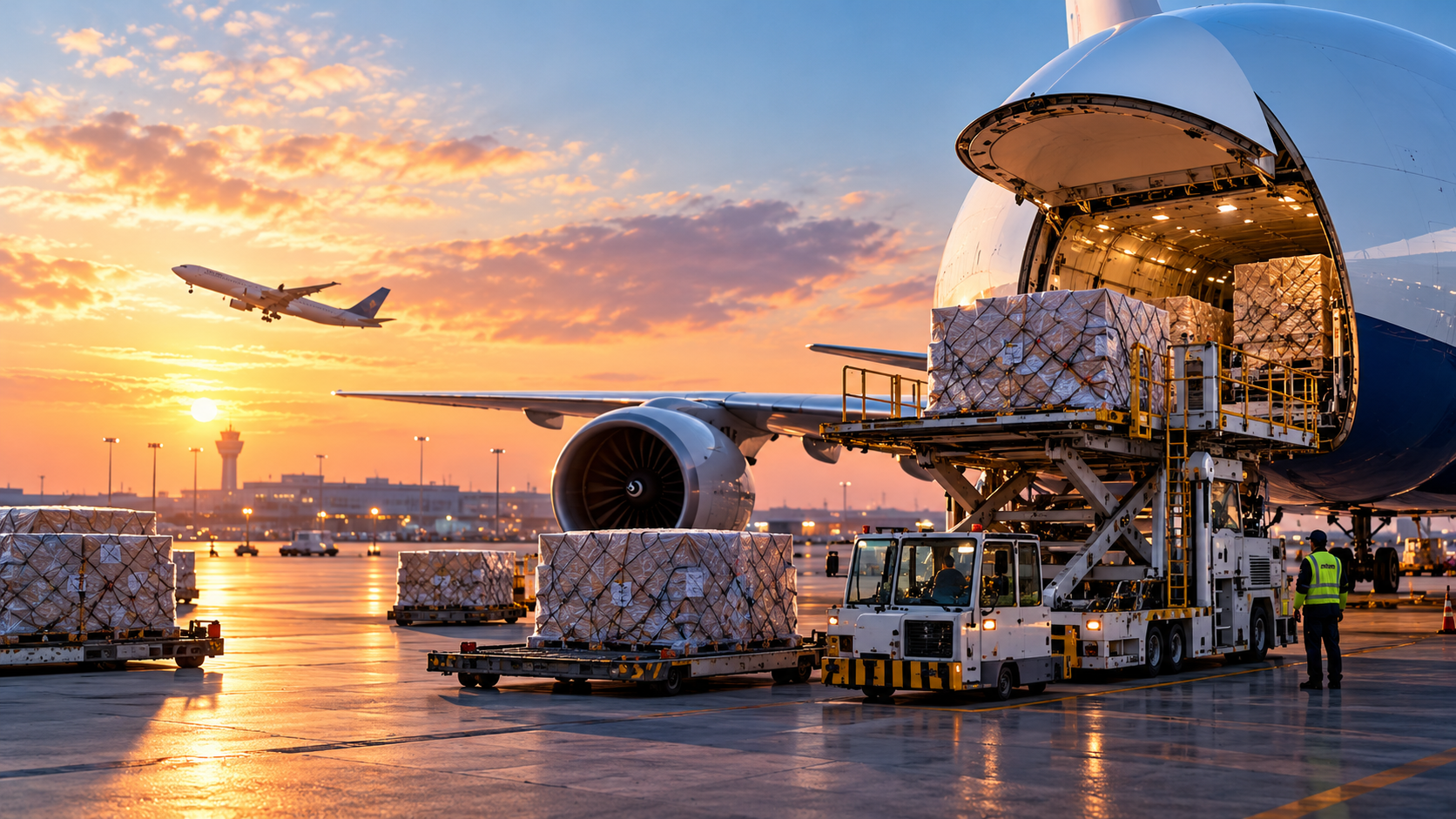
Air freight refers to the transportation of goods by aircraft, either on dedicated cargo planes or in the cargo hold of passenger aircraft. It is widely used for shipments where speed, reliability & efficient handling are important. Compared with ocean freight shipping, air freight generally offers shorter transit times, making it suitable for urgent deliveries, time-sensitive consignments & products with a limited shelf life. However, choosing between air freight & sea freight is not always straightforward. Businesses must consider the shipment's weight, dimensions, value, destination, delivery deadline & transportation budget before making a decision. For example, a manufacturer waiting for a critical machine component may prefer air freight to avoid production downtime. On the other hand, a business transporting large quantities of non-urgent goods may find ocean shipping more economical. A reliable freight forwarding company in Mumbai can help businesses evaluate these options and select the most suitable transportation method for their requirements.
Why is Mumbai an Important Hub for Air Freight?
Mumbai has long been an important centre for India's import-export trade. Its commercial infrastructure, international airport, seaport connectivity & access to major industrial & business markets make it a strategic location for logistics operations. For importers & exporters, working with freight forwarders in Mumbai can simplify shipment coordination, documentation & communication across multiple stakeholders. A well-connected logistics company in Mumbai can also coordinate airport transportation, customs documentation, warehousing & onward delivery, helping businesses manage their cargo more efficiently. Mumbai's location is particularly useful for businesses that require international shipping services across major trade destinations, including the United States, Europe, the Middle East & Asia. For companies managing regular international shipments, a dependable freight forwarding company in India can provide the operational support needed to connect domestic suppliers, international buyers, customs authorities & transportation partners.
Understanding International Air Freight Services:
International air freight involves more than moving cargo from one airport to another. It requires coordination between the shipper, consignee, freight forwarder, airline, customs authorities & destination agents. Professional international air freight services typically involve shipment planning, cargo collection, documentation, export customs procedures, airline booking, transportation, import customs coordination & final delivery. For businesses looking for air freight services India, it is important to work with a logistics partner that understands both the operational & documentation requirements of international trade. The process generally begins with understanding the cargo details, including its dimensions, gross weight, commodity type, destination & required delivery timeline. Based on this information, the shipment can be planned around available airline capacity, transit times & applicable handling requirements. Businesses importing goods may also require air cargo to India services, particularly when sourcing components, machinery, samples or finished products from overseas suppliers. Clear communication at every stage helps reduce uncertainty & makes it easier to plan inventory, production & customer deliveries.
How to Choose the Right Air Freight Solution:
Not every shipment requires the same transportation strategy. A good logistics partner looks beyond the immediate requirement & considers how the shipment fits into the customer's wider supply chain.
1. Delivery timelines:
Air freight is often preferred when a shipment must reach its destination quickly. However, the total delivery timeline includes more than the flight itself. Pickup, airport handling, customs clearance, transfers & final delivery can all influence the overall transit time.
2. Cargo dimensions and weight:
Air freight charges are generally influenced by chargeable weight, which considers both actual weight & volumetric weight. Accurate cargo measurements help businesses estimate costs & avoid unexpected adjustments.
3. Nature of the goods:
Certain commodities may require special packaging, temperature control, safety documentation or airline approval. Businesses should share accurate cargo details with their freight forwarder before booking.
4. Customs documentation:
Incorrect or incomplete paperwork can delay a shipment even when airline capacity is available. Depending on the shipment, documents may include a commercial invoice, packing list, air waybill, permits & other regulatory declarations. For shipments moving through Mumbai, coordination with the relevant customs authorities & service providers is an important part of the process.
5. Total logistics cost:
The cheapest freight rate does not always represent the most economical solution. Businesses should consider the complete cost, including collection, handling, documentation, customs, storage & delivery. A reliable logistics partner helps customers understand these costs before the shipment moves.
Air Freight & Ocean Freight: Finding the Right Balance
Although air freight is an effective solution for time-sensitive shipments, it is only one part of the wider logistics network. Ocean freight logistics remains essential for transporting large volumes, heavy cargo & goods that can accommodate longer transit times. Businesses working with ocean freight forwarders may use full container load & less than container load arrangements depending on the quantity of cargo. FCL & LCL shipping provides flexibility for businesses that need either an entire ocean container or space within a shared container. Similarly, sea freight shipping & sea cargo services can support regular imports & exports where cost efficiency is a priority. Businesses may also work with ocean shipping companies & logistics partners that coordinate ocean logistics, ocean freight tracking & international cargo movement. The choice between air freight & ocean freight shipping depends on the nature of the goods, shipment urgency & overall commercial priorities. For instance, a business might move urgent spare parts by air while transporting its regular inventory through sea freight. This approach can help maintain operational continuity without making every shipment dependent on the higher cost of air transportation. A logistics provider with experience across both modes can help businesses build a more balanced transportation strategy.
The Importance of Multimodal Transport:
Modern supply chains rarely operate through a single transportation method. Depending on the shipment, businesses may need air, ocean & rail transport, along with road transportation for collection and delivery. This is where multimodal transport becomes valuable. Multimodal logistics allows different transportation modes to work together as part of a coordinated shipment plan. For example, cargo may travel by road from a supplier's facility to an airport, by air to an international destination & by road again to the consignee's warehouse. For other shipments, sea freight, rail transport & road delivery may provide a more cost-effective alternative. Well-planned transit logistics solutions help businesses manage these movements while keeping track of milestones, documentation & delivery schedules. Transit point logistics tracking can provide useful visibility into shipment progress, depending on the tracking systems available from the carriers & service providers involved. For businesses with complex cargo requirements, a project logistics company may also coordinate specialised equipment, oversized cargo, route planning & multiple transportation partners.
Beyond Transportation: Managing the Entire Supply Chain
Efficient logistics involves much more than arranging a flight or booking container space. Businesses also need dependable procurement, inventory planning, storage & delivery coordination. This is why supply chain management services are becoming increasingly important for companies involved in international trade. Effective supply chain logistics connects suppliers, manufacturers, distributors & customers through a coordinated movement of goods & information. Strong global supply chain management also helps businesses respond to changing demand, supplier delays & transportation disruptions. For companies sourcing goods internationally, procurement management & procurement in logistics can help align purchasing decisions with transportation availability, inventory requirements & delivery schedules. Warehousing logistics is another important consideration. Goods may need temporary storage before export, after import or while awaiting onward transportation. A dependable warehouse logistics company can help coordinate storage, cargo handling, inventory visibility & dispatch planning. Businesses that require door to door cargo services can benefit from a coordinated approach covering the first mile to last mile delivery. This reduces the need to manage multiple service providers independently & can make the shipment process easier to oversee. Depending on the business requirement, these services may form part of broader international shipping services & integrated global logistics solutions.
Air Freight for USA Shipping & Other International Markets:
The United States remains an important destination & sourcing market for many Indian businesses. However, shipping cargo internationally requires careful planning, particularly when delivery timelines, customs requirements & destination handling need to be coordinated. Businesses involved in USA shipping may use air freight for urgent samples, replacement parts, high-value products & time-sensitive commercial consignments. For urgent USA cargo shipping, it is important to confirm airline capacity, destination handling arrangements, documentation requirements & the expected delivery timeline before dispatch. At the same time, USA trade lane container shipping may be more appropriate for larger consignments that do not require air transportation. A freight forwarder with experience in both air & ocean movements can help businesses compare options based on cost, transit time & cargo specifications. The same principle applies to other international markets. Selecting the right mode of transport & planning customs procedures in advance can make a meaningful difference to the overall shipping experience.
Customs Clearance & Documentation:
Customs clearance is a critical part of international freight forwarding. Even a well-planned shipment can face delays if its documentation is incomplete or the cargo details do not match the declarations submitted. Businesses shipping through Mumbai should ensure that their commercial invoices, packing lists, classification details, permits & other applicable documents are accurate & available when required. Customs clearance in Mumbai may involve coordination with customs authorities, customs brokers, airlines, terminal operators & other service providers, depending on the shipment and applicable procedures. An experienced logistics partner can help identify documentation requirements early, coordinate the necessary formalities & keep the shipper informed about outstanding actions. It is also important to remember that customs release depends on the relevant authorities & regulatory requirements. No freight forwarder can guarantee clearance within a fixed timeframe for every shipment.
Specialised Cargo & Additional Logistics Requirements:
Some businesses handle shipments that require more than standard air or ocean transportation. For example, companies moving bulk liquids may require ISO Tanks, subject to the cargo's compatibility & applicable transport regulations. Large industrial shipments may need specialised project logistics planning, while other businesses may require cross stuffing facility arrangements when cargo needs to be transferred between containers under suitable operational & regulatory conditions. Depending on the commodity & shipment plan, ship chartering may also be relevant for specialised or large-scale cargo movements. Although these services are not direct substitutes for air freight, they form part of the wider capabilities that may be needed when managing complex international shipments. A transport company in Mumbai or another Indian commercial centre should be able to assess the actual requirement & help identify the appropriate transportation & handling arrangements. For businesses with shipments crossing multiple regions, cross country logistics requires careful coordination between transport providers, warehouses, customs processes & delivery teams.
Why Work with a Freight Forwarding Partner in India?
International shipping can quickly become complicated when multiple countries, transportation modes & service providers are involved. A dependable freight forwarding company in India can help businesses coordinate the movement of cargo while maintaining communication throughout the shipment lifecycle. When evaluating a logistics partner, businesses should look for practical experience, transparent communication, reliable operational coordination, suitable carrier networks & a clear understanding of import-export requirements. Companies may also consider whether the provider has relevant quality management systems & certifications, such as ISO certification, where applicable. The objective is not simply to move cargo from one location to another. It is to ensure that transportation supports the business's wider operational goals. For an Indian exporter, this could mean helping an overseas customer receive goods within an agreed timeframe. For an importer, it could mean ensuring that essential materials arrive before production schedules are affected. For businesses managing regular shipments, a well-organised freight forwarding process can support better planning, improved visibility and stronger relationships with suppliers and customers.
Making Air Freight Work for Your Business:
Air freight continues to play an important role in international trade, particularly for businesses that depend on speed, reliability & timely deliveries. For companies operating in Mumbai, access to international air cargo connections creates opportunities to reach global markets & manage time-sensitive shipments more effectively. However, successful shipping depends on more than choosing the fastest mode of transportation. It requires accurate documentation, careful shipment planning, customs coordination & a clear understanding of the business's supply chain requirements. Whether you need international air freight, ocean freight, multimodal transport, warehousing logistics or integrated import export logistics, the right approach begins with understanding your cargo and your delivery priorities. At the end of the day, good logistics should make business easier. With the right planning & a dependable freight forwarding partner, companies can manage their shipments with greater confidence & keep their operations moving in the right direction.