


What Is Customs Clearance? Process, Importance & Guide.
When goods move across international borders, customs clearance is one of the most important steps in the international shipping & logistics process. Whether you are importing products, exporting goods or managing an international supply chain. Customs Clearance ensures that your shipment complies with the customs laws & regulations of the country of origin & destination. For businesses using ocean freight, sea freight, air freight, rail transport, or multimodal transport, understanding customs clearance can help prevent shipment delays, unexpected costs, penalties & supply chain disruptions. Customs clearance involves submitting the required documents, declaring goods accurately, determining applicable customs duties & taxes & obtaining approval from customs authorities before goods can enter or leave a country. For importers & exporters working with a freight forwarding company in Mumbai, freight forwarding company in India or international logistics provider, efficient customs clearance is an essential part of successful global trade. In this guide, we explain what customs clearance is, how the customs clearance process works, why it is important & how businesses can make customs clearance faster & more efficiently.
What Is Customs Clearance?
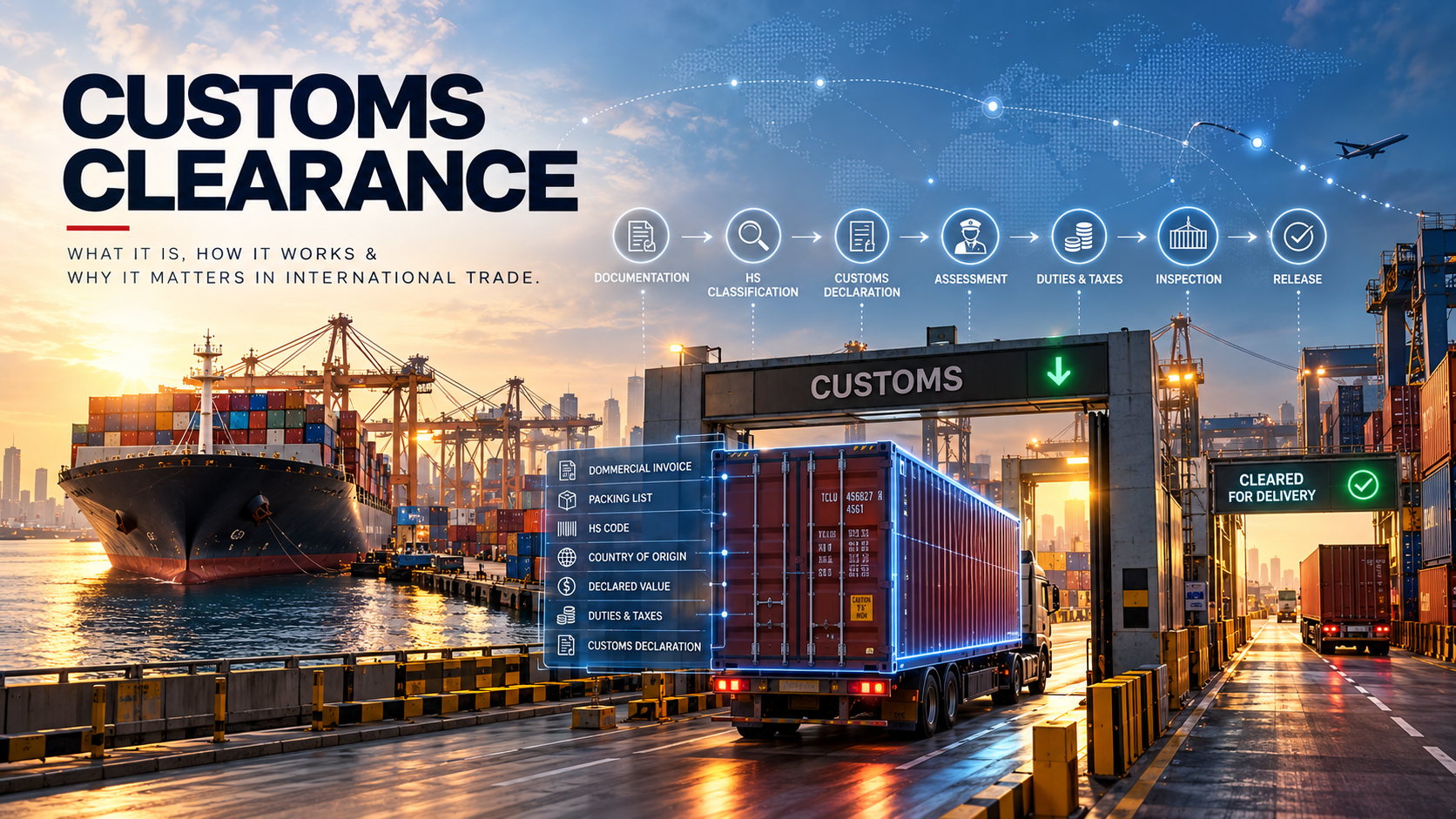
Customs Clearance is the official process of obtaining permission from customs authorities for goods to be imported into or exported from a country. Whenever cargo crosses an international border, customs authorities need information about the shipment. This can include the type of goods, quantity, value, country of origin, destination, importer, exporter & applicable product classifications. The customs clearance process generally involves documentation, customs declarations, cargo assessment, duty & tax calculation, inspection where required & final cargo release. For example, a company importing an ocean container through a major port may need to complete customs clearance before the container can be released for inland transportation. The same principle applies to sea cargo services, international air freight, air cargo to India, USA shipping & other international shipping services. For this reason, customs clearance is an integral part of freight forwarding services in India, import export logistics, ocean freight logistics & global logistics solutions.
Why Is Customs Clearance Important?
Customs Clearance is important because it ensures that goods moving between countries comply with applicable laws & regulations. Without proper customs clearance, shipments can be delayed, inspected, held or rejected by customs authorities. Businesses may also face additional storage charges, demurrage, penalties & disruptions to their supply chain.
1. Customs Clearance Ensures Legal Compliance:
Every country has specific customs regulations governing imports & exports. Customs Clearance ensures that businesses provide the necessary information & documentation required by customs authorities. Correct product classification, accurate cargo descriptions, proper valuation & complete documentation are essential components of customs clearance. For companies involved in global supply chain management & international supply chain management, maintaining customs compliance is essential for avoiding unnecessary risks.
2. Customs Clearance Helps Prevent Shipping Delays:
One of the most common causes of international shipping delays is incorrect or incomplete customs documentation. A missing document, incorrect HS code, inaccurate cargo value or discrepancy between shipping documents can result in additional customs checks. This is particularly important for ocean freight shipping & sea freight shipping because cargo may remain at a port or terminal while customs issues are resolved. Businesses working with experienced ocean freight forwarders, ocean freight logistics providers or freight forwarders in Mumbai can benefit from professional assistance with documentation & shipment coordination.
3. Customs Clearance Helps Calculate Duties and Taxes:
Customs authorities use information such as the product classification, declared value, country of origin & applicable trade regulations to determine customs duties & taxes. Accurate customs clearance documentation helps businesses estimate their landed costs & manage procurement in logistics more effectively. For companies involved in procurement management, international sourcing & supply chain management services. Understanding customs duties is important when calculating the total cost of imported goods.
4. Customs Clearance Supports Supply Chain Management:
Modern supply chains involve multiple stages. It includes procurement, manufacturing, warehousing, transportation, customs clearance, distribution & final delivery. A delay at the customs stage can affect the entire supply chain. Efficient customs clearance allows cargo to move smoothly between ports, warehouses, distribution centers & final destinations. This makes customs clearance particularly important for businesses managing supply chain logistics, warehousing logistics, multimodal logistics & first mile to last mile delivery.
How Does the Customs Clearance Process Work?
The customs clearance process can vary depending on the country, type of cargo, mode of transportation & applicable regulations. However, most customs clearance processes involve several common steps.
Step 1: Prepare Customs Clearance Documents
The first step in customs clearance is preparing all necessary documentation. Common customs clearance documents may include:
- Commercial Invoice
- Packing List
- Bill of Lading
- Airway Bill
- Certificate of Origin
- Import or Export Licenses
- Insurance Documents
- Product Certificates
- Customs Declaration
- Other Regulatory Documents
For FCL & LCL shipping, documentation must accurately describe the cargo & match the physical shipment. For sea freight/ocean freight the bill of lading & commercial invoice are particularly important for the customs clearance process.
Step 2: Determine the Correct HS Code
One of the most important parts of customs clearance is correctly classifying goods using the applicable Harmonized System or HS code. The HS code helps customs authorities identify the type of goods & determine applicable duties, taxes, restrictions & regulatory requirements. Incorrect classification can lead to customs clearance delays, additional duties, penalties or compliance issues. Businesses should therefore verify HS codes before shipping cargo internationally.
Step 3: Submit the Customs Declaration
The importer, exporter, customs broker or authorized logistics provider submits the required customs declaration & supporting documents. The information provided must be accurate & consistent across all documents. For businesses using a freight forwarding company in India, the freight forwarder or customs specialist may coordinate documentation & communication with relevant parties.
Step 4: Customs Assessment and Inspection
Customs authorities may review the submitted documents & assess the shipment. Depending on the shipment & applicable regulations, customs may also conduct a physical inspection. Not every shipment requires physical inspection, but businesses should be prepared to provide additional information if requested.
Step 5: Pay Customs Duties and Taxes
If duties, taxes or other customs charges apply, these must generally be paid before the shipment can be released. Understanding potential customs costs before shipping can help businesses plan their procurement in logistics & overall supply chain costs.
Step 6: Customs Release and Cargo Delivery
Once the customs clearance requirements have been completed, customs releases the cargo. The shipment can then move to the next stage of transportation, warehousing, distribution or final delivery. This could involve road transportation, rail transport, another ocean shipment or door to door cargo services.
Customs Clearance for Ocean Freight & Sea Freight
Customs Clearance is particularly important when businesses use ocean freight & sea freight for international transportation. Ocean freight shipping is widely used for large-volume international cargo because it can provide cost-effective transportation for FCL & LCL shipments. An ocean container may travel across several countries & pass through ports, terminals, customs facilities, warehouses & inland transportation networks before reaching its final destination. Ocean shipping companies, ocean freight forwarders & logistics providers coordinate multiple aspects of this process. A professional freight forwarding company can assist with ocean freight logistics, documentation, cargo movement, shipment tracking & customs clearance coordination. Ocean freight tracking can also provide businesses with visibility into their cargo movement, helping them plan warehousing & delivery activities more effectively.
Customs Clearance in Mumbai & India
For businesses importing or exporting through India, understanding customs clearance requirements is particularly important. Customs clearance in Mumbai is relevant to businesses using Mumbai & nearby logistics gateways for international cargo movement. A freight forwarding company in Mumbai can help businesses coordinate international shipping, ocean freight, sea freight, air freight, customs clearance, transportation, warehousing & final delivery. Similarly, a freight forwarding company in India can provide broader freight forwarding services India & support businesses with import export logistics across different regions.
Businesses may work with freight forwarders in Mumbai & India for services such as:
- Ocean Freight or Sea Freight Shipping
- Air Freight Services
- International Air Freight
- FCL & LCL Shipping
- Customs Clearance
- Door to Door Cargo Services
- Warehousing Logistics
- Multimodal Transport
- Import Export Logistics
- Supply Chain Logistics
- Cross Country Logistics
Customs Clearance & Multimodal Transport
Many international shipments use more than one mode of transportation. For example, cargo may travel by ocean freight from an overseas supplier to India, complete customs clearance at the port, move by rail transport or road to an inland location & finally be delivered to a warehouse or customer. This is known as multimodal transport or multimodal logistics. An integrated logistics provider can coordinate transportation across different stages & help businesses manage customs clearance as part of the overall shipment plan. This can be particularly useful for companies looking for transit logistics solutions, global logistics solutions or international shipping services.
Role of Freight Forwarders in Customs Clearance
Freight forwarders play an important role in international cargo movement. A freight forwarding company may coordinate with shipping lines, airlines, customs brokers, transport companies, warehouses, ports & other logistics partners. Depending on the service arrangement, freight forwarders can help businesses manage:
- Customs Clearance Documentation
- Ocean Freight or Sea freight
- International Air Freight
- FCL & LCL Shipping
- Cargo Consolidation
- Warehousing Logistics
- Inland Transportation
- Door to Door Cargo Services
- Shipment Tracking
- Import Export Logistics
- Final Delivery Coordination
Customs Clearance for Air Freight
Customs clearance is not limited to ocean shipping. Businesses using air freight services India or international air freight also need to comply with applicable customs regulations. Air cargo to India may require faster processing because air freight is often used for urgent or time-sensitive shipments. Companies shipping urgent USA cargo shipping, for example, may use air freight when delivery speed is more important than the cost advantages associated with ocean freight. Regardless of transportation mode, accurate documentation remains essential for efficient customs clearance.
Customs Clearance for Specialized Cargo
Different types of cargo may have different customs and regulatory requirements. Project cargo, industrial equipment, machinery, specialized materials & other complex shipments may require additional documentation & careful coordination. A project logistics company may need to coordinate customs clearance with transportation planning, cargo handling, warehousing & final delivery. Similarly, shipments involving ISO Tanks may require specific documentation & compliance procedures depending on the contents & destination. For businesses operating specific trade lanes such as USA Trade lane container shipping, understanding both origin & destination customs requirements is essential.
Common Reasons for Customs Clearance Delays
Businesses can experience customs clearance delays for several reasons. Some of the most common include:
- Incomplete Customs Documentation
- Incorrect HS Codes
- Incorrect Cargo Descriptions
- Incorrect Declared Value
- Missing Licenses or Certificates
- Document Discrepancies
- Customs Inspections
- Unpaid Customs Duties or Taxes
- Restricted or Prohibited Goods
- Incorrect Importer or Consignee Details
Even a small documentation error can delay cargo release. For businesses involved in international shipping services, incorporating customs clearance into shipment planning from the beginning can help minimize these risks.
How Can Businesses Make Customs Clearance Faster?
Businesses can take several practical steps to improve customs clearance efficiency.
Prepare Documentation Early:
Do not wait until the shipment arrives at the destination. Prepare & verify customs clearance documentation before the cargo reaches the border, port or airport.
Use Accurate Product Descriptions:
Cargo descriptions should clearly and accurately identify the goods. Vague or incomplete descriptions can result in additional customs queries.
Verify HS Codes:
Correct HS classification is essential for determining duties, taxes & regulatory requirements.
Understand Import Regulations:
Import regulations can differ significantly between countries. Businesses should understand the customs requirements applicable to their products & destinations.
Work With Experienced Logistics Partners:
A reliable freight forwarding company can coordinate transportation, documentation, customs clearance, warehousing & delivery. For companies looking for a transport company in Mumbai, transport company in India, warehouse logistics company or integrated supply chain management services, choosing an experienced logistics partner can improve overall shipment efficiency.
Customs Clearance and End-to-End Supply Chain Management
Customs clearance should not be viewed as an isolated administrative task. It is a critical component of end-to-end supply chain management. From procurement management & procurement in logistics to international transportation, customs clearance, warehousing, distribution & final delivery, every stage of the supply chain needs to work together. Businesses involved in global supply chain management & international supply chain management need visibility & coordination across multiple logistics activities. An integrated logistics provider can combine ocean freight, sea freight, air freight, multimodal transport, warehousing logistics, customs clearance & first mile to last mile delivery into a coordinated logistics strategy. This approach can help businesses improve shipment visibility, manage costs, reduce delays & create more reliable international logistics operations.
Customs clearance is an essential part of international trade & global logistics. It ensures that goods crossing international borders comply with customs regulations, documentation requirements, duties, taxes & other applicable laws. Whether your business uses ocean freight shipping, sea freight shipping, international air freight, rail transport or multimodal transport, effective customs clearance can make a significant difference to the efficiency of your supply chain. For importers & exporters, proper customs clearance can help reduce delays, avoid unnecessary costs, maintain regulatory compliance & ensure smoother cargo movement. Working with an experienced freight forwarding company in Mumbai or freight forwarding company in India can further simplify the process. From customs clearance & ocean freight logistics to warehousing logistics, door to door cargo services, shipment tracking & final delivery, an integrated logistics partner can help manage the entire journey.
Ultimately, successful international logistics is about more than moving goods from one country to another. It is about ensuring that every shipment moves through the supply chain efficiently, compliantly & with minimal disruption. That is why customs clearance remains one of the most important elements of modern international shipping, freight forwarding & global supply chain management.